Choosing from the many types of paper for printing can feel like a guessing game. Gloss, matte, kraft, felt, metallic, neon: each one changes how a design looks, how it feels, and how long it lasts. Pick well and the paper does half the design work for you. Pick badly and even great artwork falls flat.
In this guide we start with the basics of how printing paper is classified. Then we walk through the label papers Quadlabels offers, with what each one is good at and where it falls short.
What Makes One Paper Different From Another
Five features set printing papers apart. Knowing them makes every product page easier to read.
- Coating. Uncoated paper has no surface layer. It feels rougher and bulkier, and it’s easy to write on. Coated paper has a smooth layer on top. Less ink soaks in, so prints look crisper. The coating also adds resistance to dirt, moisture, and wear.
- Finish. Coated papers come in gloss, semi-gloss (also called satin or silk), and matte. Gloss gives vivid color and deep blacks but can create glare. Semi-gloss keeps detail and saturation with less reflection. Matte softens colors and cuts glare, though blacks may look less deep.
- Weight. Paper weight is often given in grams per square metre (gsm). A higher gsm generally means thicker paper, but thickness also depends on the paper type. Uncoated paper, for example, is thicker than coated paper of the same weight.
- Texture. Some papers have a deliberate surface, such as felt, laid lines, or a rough, fiber-rich feel. Texture adds a tactile cue that smooth paper can’t.
- Special treatments. Fluorescent colors, metallic coatings, and tinted stocks all change the paper’s look before any ink goes on.
The Paper Types Quadlabels Offers
Quadlabels’ paper range falls into five groups. These are the workhorse papers. They give a clean surface for full-color artwork, and they differ mainly in how much they shine. Quadlabels’ paper roll labels page offers all three.
1. Smooth Printing Papers: Semi-Gloss, Matte, and High-Gloss
Semi-Gloss Paper
Semi-gloss paper sits in the middle. Quadlabels calls it one of its most generic and popular materials.
- Weight: 54# (80 gsm), on a #40 paper liner
- Adhesives: permanent, aggressive, or removable
- Temperatures: minimum application 32°F; the permanent adhesive has a service range of -4 to 158°F
- Finishing: all options are available, including gloss and matte lamination and UV varnish
- Best for: indoor products in mild conditions
- Watch out for: it tears easily, and it isn’t suited to humid or outdoor settings
The removable option is handy for products where the label might need to come off cleanly.
Matte Paper
Matte paper has a non-glossy surface with a natural, organic feel. Quadlabels describes it as a good match for intricate designs, since the low-glare surface keeps small details readable. The paper roll labels page lists it as a popular pick for wine, candle, and boutique product labels.
- Weight: 60# (90 gsm), on a #40 paper liner
- Adhesive: a general-purpose, strong permanent acrylic adhesive
- Temperatures: minimum application 32°F; service range -4 to 176°F
- Finishing: all options are available, though adding a gloss coating would undo the matte look
- Watch out for: UV inks are shiny, so full-coverage, vivid artwork won’t look truly matte. It also isn’t recommended for highly curved surfaces
High-Gloss Paper
High-gloss paper is the shelf-grabber. The shine makes colors pop, which suits products competing for attention in stores or online marketplaces.
- Weight: 60# (90 gsm), on a bleached, calendered #40 paper liner
- Adhesive: a cold-temperature hot melt adhesive, rated permanent
- Temperatures: minimum application 10°F; service range -50 to 145°F
- Best for: indoor, low-humidity use
- Watch out for: it can absorb moisture and lose adhesion in high humidity, and it tears easily
Not sure whether to go matte or gloss? Our comparison of matte vs. gloss lamination covers the same decision from the finishing side.
2. Fluorescent Paper: Maximum Visibility
Fluorescent paper is the loudest option in the range. It comes in five neon colors: red, orange, green, yellow, and pink. The full range is on the fluorescent labels page.
All five share the same build:
- Weight: 60# paper, on a bleached, calendered 40# paper liner
- Adhesive: a general-purpose hot melt adhesive with quick tack
- Temperatures: minimum application 25°F; service range -50 to 140°F
- Common uses: warning and caution labels, safety notices on machinery, chemicals, or electrical equipment, plus sale stickers and color-coding
- Watch out for: low water and oil resistance
One rule stands out. Quadlabels strongly discourages surface finishing on fluorescent paper, because lamination or varnish can work against the material’s whole purpose. Leave it uncoated.
Fading is worth knowing about too. Quadlabels’ product pages don’t give lightfastness data. Research on fluorescent colorants in other products, namely watercolor paints, found that most faded quickly under light. Labels aren’t paint, so that result doesn’t transfer directly. Still, it’s a good reason to keep fluorescent labels away from long sun exposure and to test them in your own conditions.
3. Metalized Paper: Shine Without Foil Stamping
Metalized paper gets its mirror-like look from a very thin aluminum layer. Paper makers describe it as a paper-based alternative to metallized plastic films. They also pitch it as a way to add shine without separate foil or metallic ink.
Quadlabels offers three versions. Quadlabels positions them for cosmetics, beverages, and luxury products. They share similar limits: low water and oil resistance, and a reminder to test in the real application.
Silver Metalized Paper is paper coated with an aluminum layer, with a glossy metallic silver finish.
- Thickness: 2.6 mil
- Adhesive: cold-temperature hot melt, on a #40 paper liner
- Temperatures: minimum application 10°F; service range -50 to 145°F
- Uses: cosmetics, food and beverage, and luxury products. Quadlabels’ page also positions it for bottles, tubes, and curved containers, and calls it more flexible than silver BOPP
Bright Gold Metalized Paper has a shiny gold finish meant to mimic the look of real gold.
- Adhesive: cold-temperature hot melt, on a 40# paper liner
- Temperatures: minimum application 10°F; service range -50 to 145°F
- Uses: cosmetics, beverages, and high-end products
Dull Gold Metalized Paper is the quieter sibling, a muted, matte gold that suits more subdued branding.
- Adhesive: general-purpose hot melt with quick-stick properties
- Temperatures: minimum application 40°F; service range -50 to 150°F
- Uses: luxury products that want a softer metallic
All three accept the standard finishing options, including gloss and matte lamination and UV varnish. If you’re weighing metallic paper against foil, our guide to foil stamping vs. metallic ink printing shows how the effects compare. For a metallic film option that handles moisture better, see silver roll labels.
4. Textured Papers: Estate and Eggshell Felt
Textured papers sell on touch. They’re the ones people pick up and run a thumb across. They suit wine, craft beverages, candles, artisanal food, and boutique cosmetics.
Here’s how they differ:
- Felt Estate #4 Paper: a premium textured paper with a non-glossy, organic look. Weight 60# (90 gsm).
- Estate #8 Paper: a vellum-finish paper with a soft, slightly textured surface. Weight 60# (90 gsm), on a 1.2 mil polyester liner.
- Estate #9 Paper: a cream-colored paper with a laid finish, a subtle, finely lined texture. Weight 60# (90 gsm), on a 1.2 mil polyester liner.
- White Eggshell Paper: a pristine white paper with a distinctive eggshell texture. Weight 70#.
- Beige Eggshell Paper: a warm beige, finely grained uncoated paper with a felt finish and a wet strength additive, which Quadlabels says helps it resist wrinkling in moist environments. Weight 70#.
What they share matters just as much:
- No surface finishing. Gloss, matte lamination, and UV varnish aren’t available on these papers.
- Light designs work best. Heavy artwork covers the texture, which is the main selling point.
- Temperatures: minimum application 20°F; service range -65 to 200°F.
- Water-removable adhesive. The adhesive is permanent but designed to come off when soaked in hot water, at least 100°F. Removal time varies by surface, and the pages list HDPE, polypropylene, PVC, polyester, stainless steel, and glass.
- Limits: they tear easily, aren’t suited to outdoor use, and aren’t recommended for highly curved surfaces.
The pages also recommend testing in your own conditions before you finalize a design. With textured stock, that’s good advice, since texture changes how ink and color look.
5. Natural Kraft Paper: Earthy and Honest
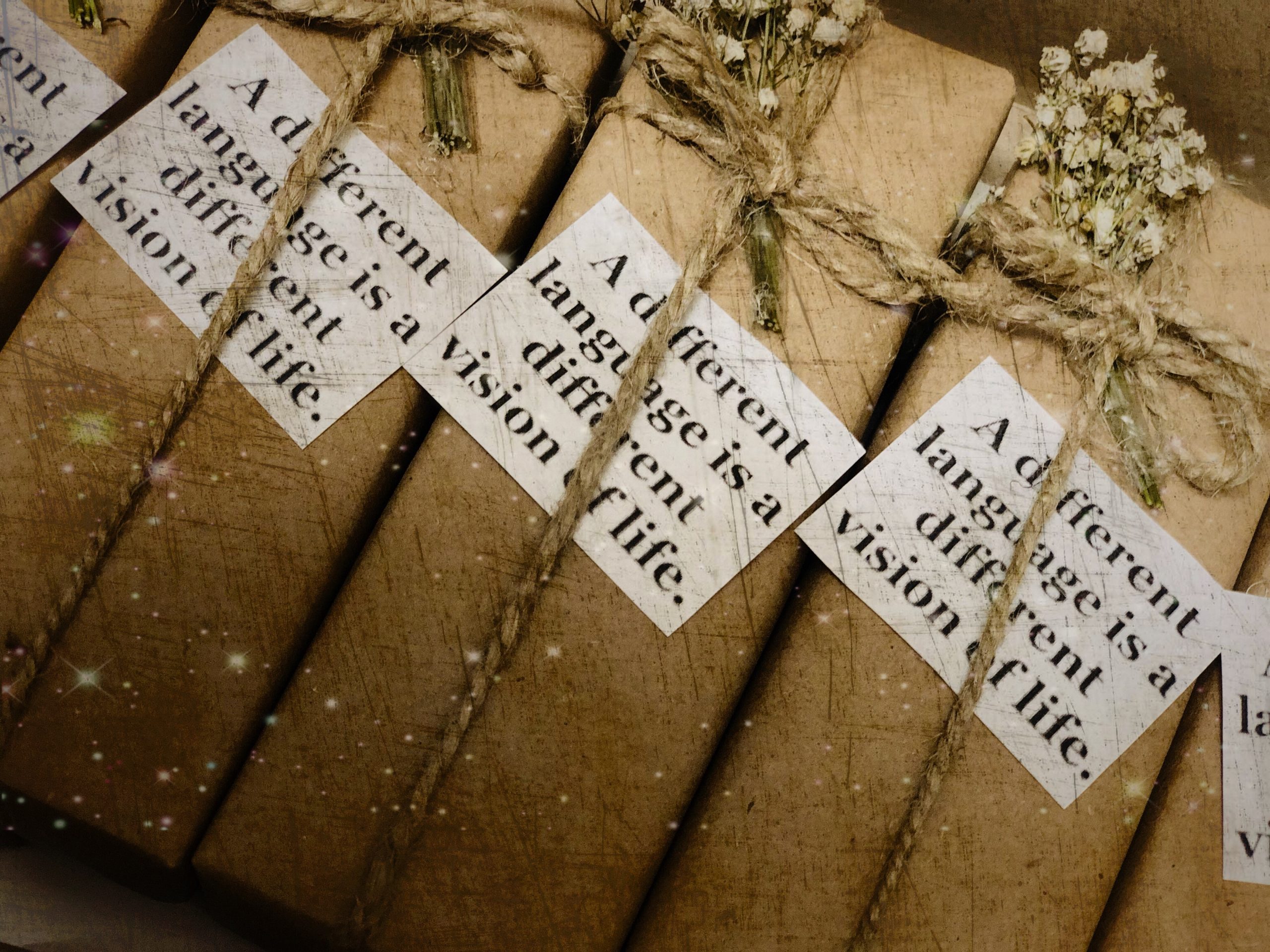
Natural kraft paper has a brown color and a textured surface that shows its natural fibers. We recommend it for organic products, sustainable packaging, and handmade goods.
- Weight: 65#, on a #40 bleached, calendered paper liner
- Adhesive: hot melt rubber-based, with good quick-stick properties
- Temperatures: minimum application 40°F; service range -50 to 150°F
- Finishing: none available
- Design tip: keep it minimal so the paper texture shows
- Watch out for: not for outdoor use, not for highly curved surfaces, and it tears easily
Kraft’s earthy look suits dry goods and handmade items.
The Paper Types Quadlabels Offers
Quadlabels’ paper range falls into five groups. Specs below come from each product’s page.
1. Smooth Printing Papers: Semi-Gloss, Matte, and High-Gloss
These are the workhorse papers. They give a clean surface for full-color artwork, and they differ mainly in how much they shine. Quadlabels’ paper roll labels page offers all three.
Semi-Gloss Paper
Semi-gloss paper sits in the middle. Quadlabels calls it one of its most generic and popular materials.
- Weight: 54# (80 gsm), on a #40 paper liner
- Adhesives: permanent, aggressive, or removable
- Temperatures: minimum application 32°F; the permanent adhesive has a service range of -4 to 158°F
- Finishing: all options are available, including gloss and matte lamination and UV varnish
- Best for: indoor products in mild conditions
- Watch out for: it tears easily, and it isn’t suited to humid or outdoor settings
The removable option is handy for products where the label might need to come off cleanly. Our guide to permanent, removable, and repositionable labels can help you choose.
Matte Paper
Matte paper has a non-glossy surface with a natural, organic feel. Quadlabels describes it as a good match for intricate designs, since the low-glare surface keeps small details readable. The paper roll labels page lists it as a popular pick for wine, candle, and boutique product labels.
- Weight: 60# (90 gsm), on a #40 paper liner
- Adhesive: a general-purpose, strong permanent acrylic adhesive
- Temperatures: minimum application 32°F; service range -4 to 176°F
- Finishing: all options are available, though adding a gloss coating would undo the matte look
- Watch out for: UV inks are shiny, so full-coverage, vivid artwork won’t look truly matte. It also isn’t recommended for highly curved surfaces
High-Gloss Paper
High-gloss paper is the shelf-grabber. The shine makes colors pop, which suits products competing for attention in stores or online marketplaces.
- Weight: 60# (90 gsm), on a bleached, calendered #40 paper liner
- Adhesive: a cold-temperature hot melt adhesive, rated permanent
- Temperatures: minimum application 10°F; service range -50 to 145°F
- Best for: indoor, low-humidity use
- Watch out for: it can absorb moisture and lose adhesion in high humidity, and it tears easily
Not sure whether to go matte or gloss? Our comparison of matte vs. gloss lamination covers the same decision from the finishing side.
2. Fluorescent Paper: Maximum Visibility
Fluorescent paper is the loudest option in the range. It comes in five neon colors: red, orange, green, yellow, and pink. The full range is on the fluorescent labels page.
All five share the same build:
- Weight: 60# paper, on a bleached, calendered 40# paper liner
- Adhesive: a general-purpose hot melt adhesive with quick tack
- Temperatures: minimum application 25°F; service range -50 to 140°F
- Common uses: warning and caution labels, safety notices on machinery, chemicals, or electrical equipment, plus sale stickers and color-coding
- Watch out for: low water and oil resistance
One rule stands out. Quadlabels strongly discourages surface finishing on fluorescent paper, because lamination or varnish can work against the material’s whole purpose. Leave it uncoated.
Fading is worth knowing about too. Quadlabels’ product pages don’t give lightfastness data. Research on fluorescent colorants in other products, namely watercolor paints, found that most faded quickly under light. Labels aren’t paint, so that result doesn’t transfer directly. Still, it’s a good reason to keep fluorescent labels away from long sun exposure and to test them in your own conditions.
3. Metalized Paper: Shine Without Foil Stamping
Metalized paper gets its mirror-like look from a very thin aluminum layer. Paper makers describe it as a paper-based alternative to metallized plastic films. They also pitch it as a way to add shine without separate foil or metallic ink.
Quadlabels offers three versions. Quadlabels positions them for cosmetics, beverages, and luxury products. They share similar limits: low water and oil resistance, and a reminder to test in the real application.
Silver Metalized Paper is paper coated with an aluminum layer, with a glossy metallic silver finish.
- Thickness: 2.6 mil
- Adhesive: cold-temperature hot melt, on a #40 paper liner
- Temperatures: minimum application 10°F; service range -50 to 145°F
- Uses: cosmetics, food and beverage, and luxury products. Quadlabels’ page also positions it for bottles, tubes, and curved containers, and calls it more flexible than silver BOPP
Bright Gold Metalized Paper has a shiny gold finish meant to mimic the look of real gold.
- Adhesive: cold-temperature hot melt, on a 40# paper liner
- Temperatures: minimum application 10°F; service range -50 to 145°F
- Uses: cosmetics, beverages, and high-end products
Dull Gold Metalized Paper is the quieter sibling, a muted, matte gold that suits more subdued branding.
- Adhesive: general-purpose hot melt with quick-stick properties
- Temperatures: minimum application 40°F; service range -50 to 150°F
- Uses: luxury products that want a softer metallic
All three accept the standard finishing options, including gloss and matte lamination and UV varnish. If you’re weighing metallic paper against foil, our guide to foil stamping vs. metallic ink printing shows how the effects compare. For a metallic film option that handles moisture better, see silver roll labels.
4. Textured Papers: Estate and Eggshell Felt
Textured papers sell on touch. They’re the ones people pick up and run a thumb across. Quadlabels groups them under felt roll labels, and they suit wine, craft beverages, candles, artisanal food, and boutique cosmetics.
Here’s how they differ:
- Felt Estate #4 Paper: a premium textured paper with a non-glossy, organic look. Weight 60# (90 gsm).
- Estate #8 Paper: a vellum-finish paper with a soft, slightly textured surface. Weight 60# (90 gsm), on a 1.2 mil polyester liner.
- Estate #9 Paper: a cream-colored paper with a laid finish, a subtle, finely lined texture. Weight 60# (90 gsm), on a 1.2 mil polyester liner.
- White Eggshell Paper: a pristine white paper with a distinctive eggshell texture. Weight 70#.
- Beige Eggshell Paper: a warm beige, finely grained uncoated paper with a felt finish and a wet strength additive, which Quadlabels says helps it resist wrinkling in moist environments. Weight 70#.
What they share matters just as much:
- No surface finishing. Gloss, matte lamination, and UV varnish aren’t available on these papers.
- Light designs work best. Heavy artwork covers the texture, which is the main selling point.
- Temperatures: minimum application 20°F; service range -65 to 200°F.
- Water-removable adhesive. The adhesive is permanent but designed to come off when soaked in hot water, at least 100°F. Removal time varies by surface, and the pages list HDPE, polypropylene, PVC, polyester, stainless steel, and glass.
- Limits: they tear easily, aren’t suited to outdoor use, and aren’t recommended for highly curved surfaces.
The pages also recommend testing in your own conditions before you finalize a design. With textured stock, that’s good advice, since texture changes how ink and color look.
5. Natural Kraft Paper: Earthy and Honest
Natural kraft paper has a brown color and a textured surface that shows its natural fibers. Quadlabels recommends it for organic products, sustainable packaging, and handmade goods.
- Weight: 65#, on a #40 bleached, calendered paper liner
- Adhesive: hot melt rubber-based, with good quick-stick properties
- Temperatures: minimum application 40°F; service range -50 to 150°F
- Finishing: none available
- Design tip: keep it minimal so the paper texture shows
- Watch out for: not for outdoor use, not for highly curved surfaces, and it tears easily
Kraft’s earthy look suits dry goods and handmade items.

Quick comparison of Quadlabels paper types
| Paper | Look and feel | Best for | Main limit |
| Semi-gloss | Smooth, moderate sheen | General indoor products | Tears easily; not for humid use |
| Matte | Non-glossy, natural | Detailed designs, wine, candles, boutique goods | Not for curved surfaces |
| High-gloss | Shiny, vivid | Retail shelf impact | Absorbs moisture in high humidity |
| Fluorescent (5 colors) | Neon, high visibility | Warnings, sales, color-coding | Low water and oil resistance |
| Silver / Bright gold metalized | Shiny metallic | Cosmetics, beverages, luxury | Low water and oil resistance |
| Dull gold metalized | Muted metallic | Subdued luxury branding | Low water and oil resistance |
| Estate #4, #8, #9 | Textured, premium | Wine, gourmet, artisanal | Tears easily; light designs only |
| White / Beige eggshell | Textured, tactile | High-end and artisanal goods | Same as Estate papers |
| Natural kraft | Brown, earthy | Organic, handmade, sustainable | Tears easily; not for curves |
How to Choose the Right Paper
Start with the product, not the paper. Ask these questions in order:
- Where will it live? Dry shelf, fridge, shower, outdoors? If there’s moisture, consider a synthetic. Paper suits dry, indoor conditions.
- What shape is the container? Flat and gently curved surfaces suit most papers. Several textured and kraft papers are not recommended for highly curved surfaces.
- What feeling should the label give? Shiny and bold points to high-gloss or metalized. Calm and natural points to matte, textured, or kraft. Urgent points to fluorescent.
- Do you need a finish? If you want lamination or UV varnish, steer away from fluorescent, textured, and kraft papers, since they don’t take finishes (or discourage them).
- Will the label need to come off? Semi-gloss has a removable adhesive option. Estate and eggshell papers use a hot-water-removable adhesive.
- Does it need a special effect? For raised or foil effects on paper, ask about digital embellishment.
Common Mistakes When Choosing Printing Paper
- Choosing by look alone. A gorgeous felt paper still tears and still dislikes humidity.
- Over-designing textured stock. Dense artwork hides the texture you paid for.
- Laminating fluorescent paper. Quadlabels warns that finishes can work against the very visibility you chose it for.
- Expecting a true matte from vivid artwork. UV inks are shiny, so heavy coverage reduces the matte effect.
- Skipping the test. Quadlabels’ own pages advise testing performance in the actual application. Order samples and try them on real containers.
- Comparing weight numbers across paper types. Weight alone doesn’t tell you thickness. Ask for a caliper if it matters.
Which Paper Is Right for You?
Here’s a quick shortcut:
- Everyday indoor product: semi-gloss or matte
- Eye-catching retail item: high-gloss
- Warning, sale, or color-coded label: fluorescent
- Luxury or beauty product: metalized gold or silver
- Wine, candle, gourmet, or boutique brand: estate, eggshell, or matte
- Handmade or organic goods: natural kraft
Get Help Choosing Your Paper
The best paper is not always the most expensive or dramatic option. It is the one that makes the printed piece easy to use, aligned with the brand, and appropriate for the way it will be handled.
The best way to compare papers is to see and feel them. Tell us about your container, storage conditions, and the look you’re after. We will help you to choose a paper, and a finish if one applies, that fits.
If you’ve already chosen what’s best for you, place your order in our online ordering system.
FAQ
Printing paper is usually grouped by coating (coated or uncoated), finish (gloss, semi-gloss, or matte), weight, and texture. Specialty papers add effects like fluorescent color, metallic shine, or felt texture.
Uncoated paper has no surface layer, so it feels rougher and is easy to write on. Coated paper has a smooth layer that keeps more ink on the surface, so prints look crisper, and the coating adds resistance to dirt, moisture, and wear.
It depends on the product. Matte and semi-gloss suit most indoor products, high-gloss suits retail shelves, and metalized or textured papers suit premium brands. For moisture or outdoor use, a synthetic material is usually a better fit than paper.