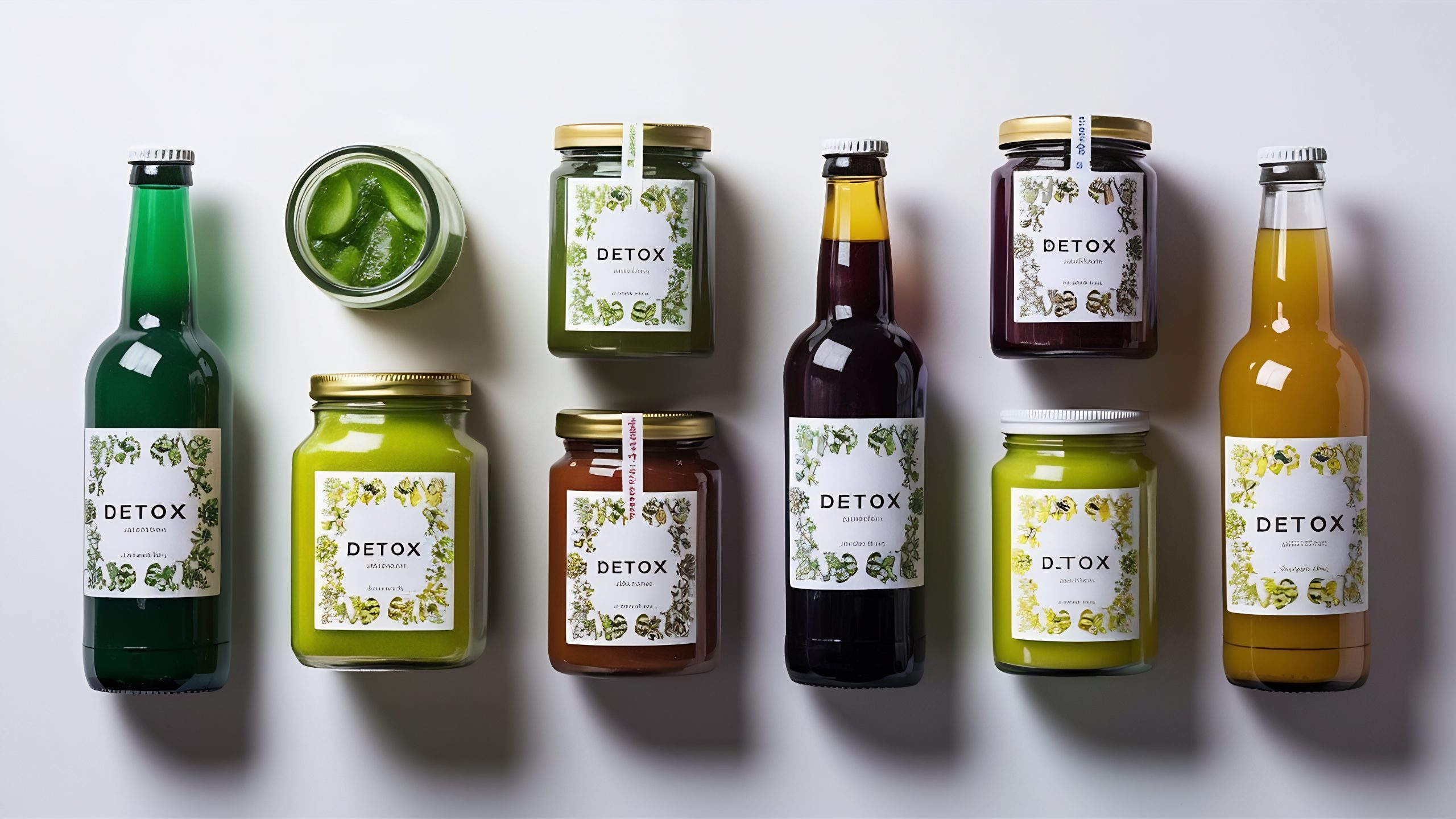
Choosing a label material is easy to underestimate until a product fails because of it. Paper labels work fine for a huge range of goods — dry retail items, indoor storage, products that never touch water. But once a label has to survive a refrigerator, a shower shelf, a sweating bottle, or a warehouse with oily hands passing it around, paper starts to show its limits: wrinkling, tearing, ink smearing, edges lifting.
That’s the gap BOPP fills. It’s one of the most widely used synthetic label materials on the market. Understanding what it actually is — and where it genuinely helps — makes it much easier to decide whether it belongs on your product.
What Are BOPP Labels?
BOPP stands for biaxially oriented polypropylene. Breaking that down:
Polypropylene is a plastic (a thermoplastic polymer) that’s been used in packaging for decades. It’s the same general material family behind many food containers and flexible packaging films.
Biaxially oriented describes what happens to that plastic during manufacturing. The raw polypropylene is formed into a film and then stretched — mechanically pulled — in two directions at once: lengthwise and widthwise. That’s the “biaxial” part. This stretching process realigns the polymer molecules. The result is a film that’s thinner, stronger, and more dimensionally stable than the unstretched plastic would be on its own.
In practical terms, that manufacturing step is why BOPP behaves so differently from paper. A paper label is made of plant fiber that absorbs moisture and tears along its grain. A BOPP label is a thin plastic film. It doesn’t absorb water the way paper does, and it resists tearing in a way fiber-based material can’t match, because there’s no grain and no fiber structure to give way.
BOPP isn’t the only synthetic label film on the market, but it’s typically the most common one businesses run into, largely because it balances performance and cost more accessibly than some alternatives.
Key Benefits of BOPP Labels for Product Packaging
Water and moisture resistance
Because BOPP film itself doesn’t absorb water, it holds up well in humid environments, refrigeration, and brief water contact — condensation on a cold beverage bottle, for example, or a jar that gets rinsed off. It’s important to be precise here: “water-resistant” is the accurate description. Whether a finished label is fully waterproof in submerged or prolonged-wet conditions depends on more than the film. It depends on the adhesive, the ink, and any laminate or coating applied on top all play a role. A BOPP label with the wrong adhesive for a cold, wet application can still lift at the edges.
Resistance to oils and everyday handling
Products that get picked up, squeezed, or handled with oily or wet hands — lotions, cooking oils, personal care items — put real stress on a label’s surface and edges. BOPP’s plastic surface resists oil penetration and surface smudging better than uncoated paper. This helps labels stay legible and intact through normal handling and shipping.
Durability and tear resistance
The biaxial stretching process gives BOPP film meaningful tensile strength for its thickness. It resists tearing and scuffing during application, shipping, and shelf handling far better than standard paper stock. That doesn’t mean the material is indestructible — a BOPP label can still be cut, punctured, or damaged under enough force — but for the wear and tear of normal product handling, it holds up noticeably longer.
Strong print quality
BOPP film is engineered with a surface treatment that helps ink adhere properly and dry cleanly. It prints well with modern digital and flexographic printing methods. Fine text, detailed graphics, and color fields typically reproduce sharply. As with any label material, actual print results also depend on the printer’s equipment, ink system, and quality control. The film provides the foundation, not the entire outcome.
Flexibility for curved containers
Because it’s a thin, pliable film, BOPP conforms well to curved surfaces — bottles, jars, tubes — without the cracking or lifting that can happen with stiffer materials on tight curves. This is one reason it’s a common choice for cylindrical packaging across food, beverage, and personal care products.
A professional, polished appearance
Clear BOPP labels, applied cleanly, can create a “no-label look” where the printed design appears to sit directly on the container rather than on a visible label. Combined with the material’s smooth surface and consistent print result, this gives many BOPP-labeled products a more premium shelf presence than a plain paper label would.
A range of finishes and looks
BOPP is available in multiple finishes and appearances, which means the material can support very different brand aesthetics without switching label types. More on that below.
Types of BOPP Labels
Not all BOPP labels look or perform identically. The main variations businesses choose between are:
White BOPP — An opaque white film that provides strong contrast for printed colors and text. This is the closest visual equivalent to a standard paper label, but with the water and durability advantages of a synthetic film.
Clear (transparent) BOPP — A see-through film used to create the “no-label look,” where the background of the container shows through around the printed design. Common on glass jars, cosmetic bottles, and premium beverage packaging.
Matte BOPP — A low-gloss, soft-finish surface that reads as understated and premium rather than shiny. Popular for cosmetics, candles, and higher-end personal care products.
Glossy BOPP — A reflective, shiny finish that tends to make colors look bolder and more vibrant under store lighting. Common for beverage and food packaging aiming for shelf impact.
Metallic BOPP — A film with a metallic-look surface (often silver or gold-toned), used when a brand wants a reflective, foil-like appearance without the cost of true foil stamping.
Choosing between these is mostly a design and positioning decision. White and glossy tend to suit bold, high-contrast retail packaging. While clear and matte tend to suit brands aiming for a cleaner, more premium look.
Where Are BOPP Labels Commonly Used?
BOPP shows up across a wide range of product categories, and the pattern behind where it works well is fairly consistent. It tends to be the better fit whenever a product’s label will face moisture, temperature changes, or frequent handling.
Food packaging often uses BOPP because containers get refrigerated, handled by multiple people, or exposed to condensation and minor spills. These are conditions where paper labels are more likely to wrinkle or tear.
Beverage bottles, especially ones served cold or stored in ice, benefit from BOPP’s resistance to the condensation and moisture that builds up on a chilled bottle.
Cosmetics and personal-care products are frequently handled with wet or oily hands, in bathroom or shower environments with ongoing humidity. These are exactly the conditions where BOPP’s water and oil resistance matter.
Household products, including cleaning supplies that may contact water or mild chemicals during use, benefit from a label material that won’t degrade with occasional exposure.
Candles — particularly jar candles — sit near heat during use and are handled often. A durable, well-adhered synthetic label tends to hold up better over the life of the product than paper in this setting.
Jars and bottles used for refrigerated or frequently handled goods — from spice jars to skincare bottles — are a natural fit for the same reasons above: moisture, handling, and sometimes temperature swings.
The common thread isn’t the product category itself — it’s the environment the label has to survive. A dry, shelf-stable product handled once or twice rarely needs BOPP. A product that faces regular moisture, oil, or handling usually benefits from it.
Is BOPP the Right Label Material for Your Product?
A short set of questions can clarify the decision:
- Will the label encounter water or condensation? If yes, BOPP is worth serious consideration over paper.
- Will the product be refrigerated or frozen? Cold, humid conditions are a common failure point for paper labels. BOPP with the right adhesive tends to hold up better.
- Will the product be handled with oily or wet hands, or stored in a humid environment like a bathroom or kitchen? BOPP’s oil and moisture resistance becomes relevant here.
- Does the container have a curved surface? BOPP’s flexibility makes it easier to apply cleanly to bottles, jars, and tubes without wrinkling.
- Does the brand want a premium, glossy, or “no-label” appearance? Clear or specialty BOPP finishes can support that look in a way plain paper typically can’t.
- How long does the label need to remain intact and legible? For products with a longer shelf life or repeated handling over time, BOPP’s durability tends to pay off.
If most of these answers point toward “yes,” BOPP is likely the stronger material choice. If a product is dry, handled minimally, and stored indoors at room temperature, paper may be entirely sufficient and more cost-effective.
It’s also worth noting that food-contact and safety requirements depend on more than the base film. Polypropylene film is widely used in food-contact packaging. But a finished label’s suitability for direct or indirect food contact depends on the specific film, ink, adhesive, and any coating used together. So it’s worth confirming compliance for the exact label construction rather than assuming it based on the material name alone.
The same applies to recyclability. Polypropylene is technically recyclable, but acceptance varies by local recycling program and depends on how the label and adhesive are removed from the container. It shouldn’t be assumed as a given for every application.
Getting Started With BOPP Labels
Once BOPP looks like the right fit, the remaining decisions are practical ones. Which finish (white, clear, matte, glossy, or metallic) fits the brand’s look, which adhesive suits the product’s storage and handling conditions, what size and shape the container requires, and which printing method will deliver the sharpest result for the design.
These choices work best when they’re made together rather than one at a time. The finish, adhesive, and printing method all interact with each other and with how the product will actually be used. Businesses working with a label printer can typically get guidance on matching these specs to their exact packaging needs, whether that’s a single custom BOPP label design or a full line of products across different container types. Quadlabels offers custom BOPP label printing with a range of materials, finishes, and sizes for businesses working through exactly this kind of decision.
FAQ
BOPP labels are made from biaxially oriented polypropylene. It is a thin plastic film that’s stretched in two directions during manufacturing to make it strong, flexible, and resistant to moisture. They’re a common synthetic alternative to paper labels for products that need extra durability.
BOPP film itself is highly water-resistant and doesn’t absorb moisture the way paper does. This makes it a strong choice for humid, refrigerated, or condensation-prone environments. Whether a finished label performs as fully waterproof also depends on the adhesive and any coating used. So it’s more accurate to describe BOPP as water-resistant rather than absolutely waterproof in every condition.
BOPP labels are common on food and beverage packaging, cosmetics and personal-care products, household cleaning products, candles, and any jars or bottles exposed to refrigeration, moisture, or frequent handling.
Clear BOPP is transparent, letting the container show through around the printed design for a “no-label” look, while white BOPP is opaque and provides strong color contrast similar in appearance to a traditional label. The choice mainly comes down to the visual effect a brand wants on its packaging.